
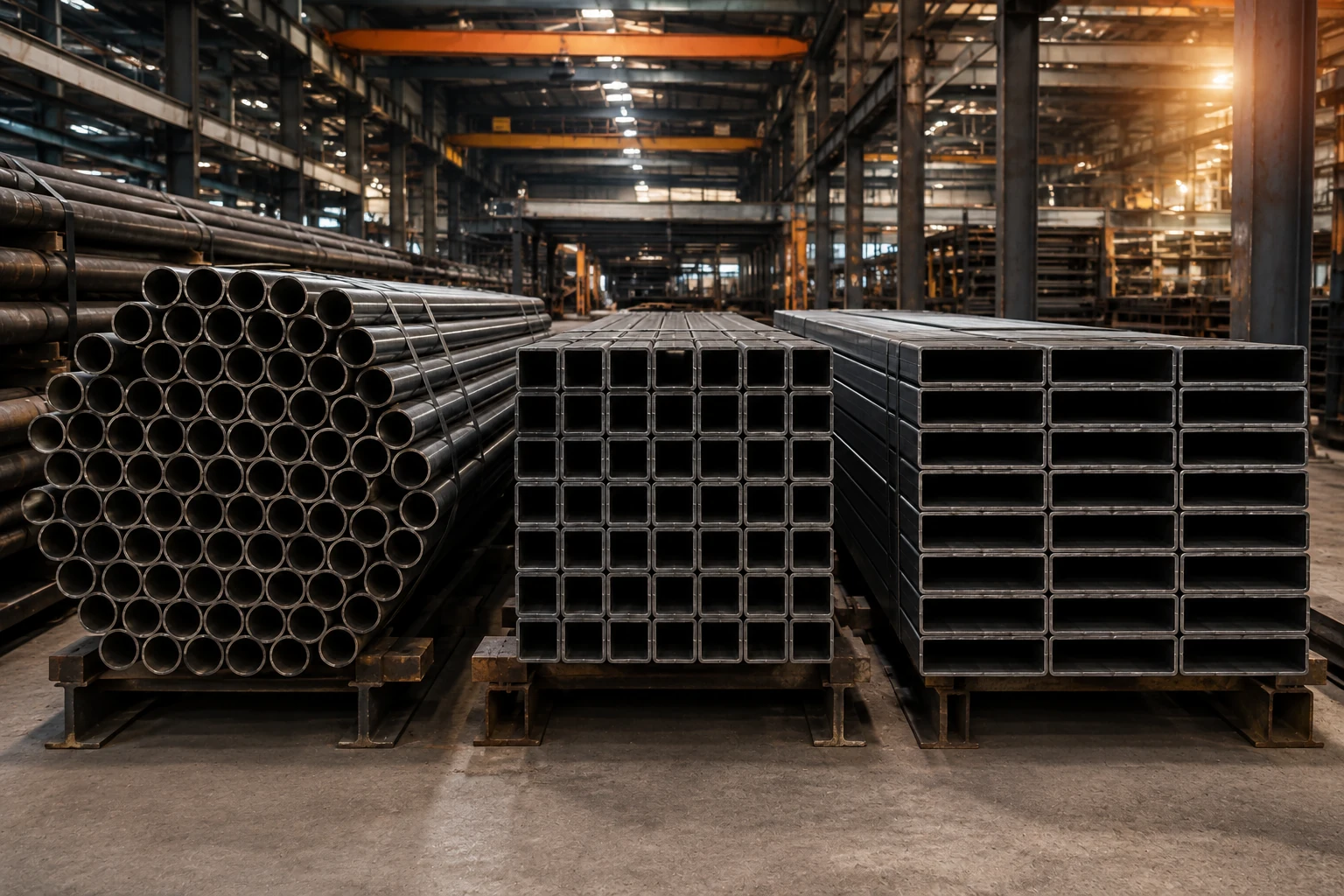
Total pipe weight comes from a verified quantity plus known pipe information such as length and unit weight or dimensions. The photo provides the count; your stock specification provides the material details used for the weight calculation.
Many warehouse teams track pipe by both pieces and weight. Keeping those two parts separate makes the result easier to understand: first verify the quantity, then calculate the material total from known stock data.
Method 1: Use a known weight per metre or per foot
If your supplier or stock table already provides a unit weight, the calculation is straightforward:
Total weight = quantity × length per item × unit weight
Method 2: Use the pipe dimensions
For compatible material workflows, weight can be estimated using known pipe dimensions, length and material information. These values come from your stock specification; they are not automatically measured from the counting photo.
Why verify the count first?
A small counting error can create a much larger weight difference when every item is several metres long. Review the markers and correct any missed or unwanted detections before using the quantity for the final weight calculation.
What should a useful record include?
- Verified quantity
- Pipe or material description
- Relevant dimensions
- Length per item
- Unit weight or selected calculation method
- Estimated total weight
- Date and time
- Marked image where useful
Where weight information helps
Estimated material totals can support warehouse records, stock comparison, dispatch preparation, loading checks, purchase verification and internal documentation.
Use Pipe Counter for the next stock check.
Count visible pipe stock from a photo, review the marked result, calculate weight and keep a useful inventory record.

